Jugendstil versus Art Nouveau in early twentieth-century Lorraine
Next week I am off to Riga in Latvia for a short holiday. One of Riga’s claims to fame is the quantity of Art Nouveau buildings in the city, including an entire Art Nouveau district. This reminded me of my unexpected discoveries in Metz and Nancy, in Lorraine, earlier this year. This story is well worth telling, despite not being about Brent, and it is, after all, local history – just not local to here.
At the end of the Franco-Prussian War, during which Marshal Bazaine’s army had been besieged and forced to surrender in Metz, the northern part of Lorraine was annexed by Germany, along with the whole of Alsace. This created the new German territory of Alsace-Lorraine (Reichsland Elsass-Lothringen.)
Initially, German architects behaved with sensitivity in Metz. When a Protestant garrison church was built for the German army between 1875 and 1881 it used the same local stone as had been used to build the cathedral, and an inoffensive Neo-Gothic style that was as at home in France as in Germany. The church was very large, and had a spire that was taller than the cathedral towers, which was assumed to be an intentional insult to the Bishop of Metz, who was pro-French, but overall the building fitted into the French cityscape.
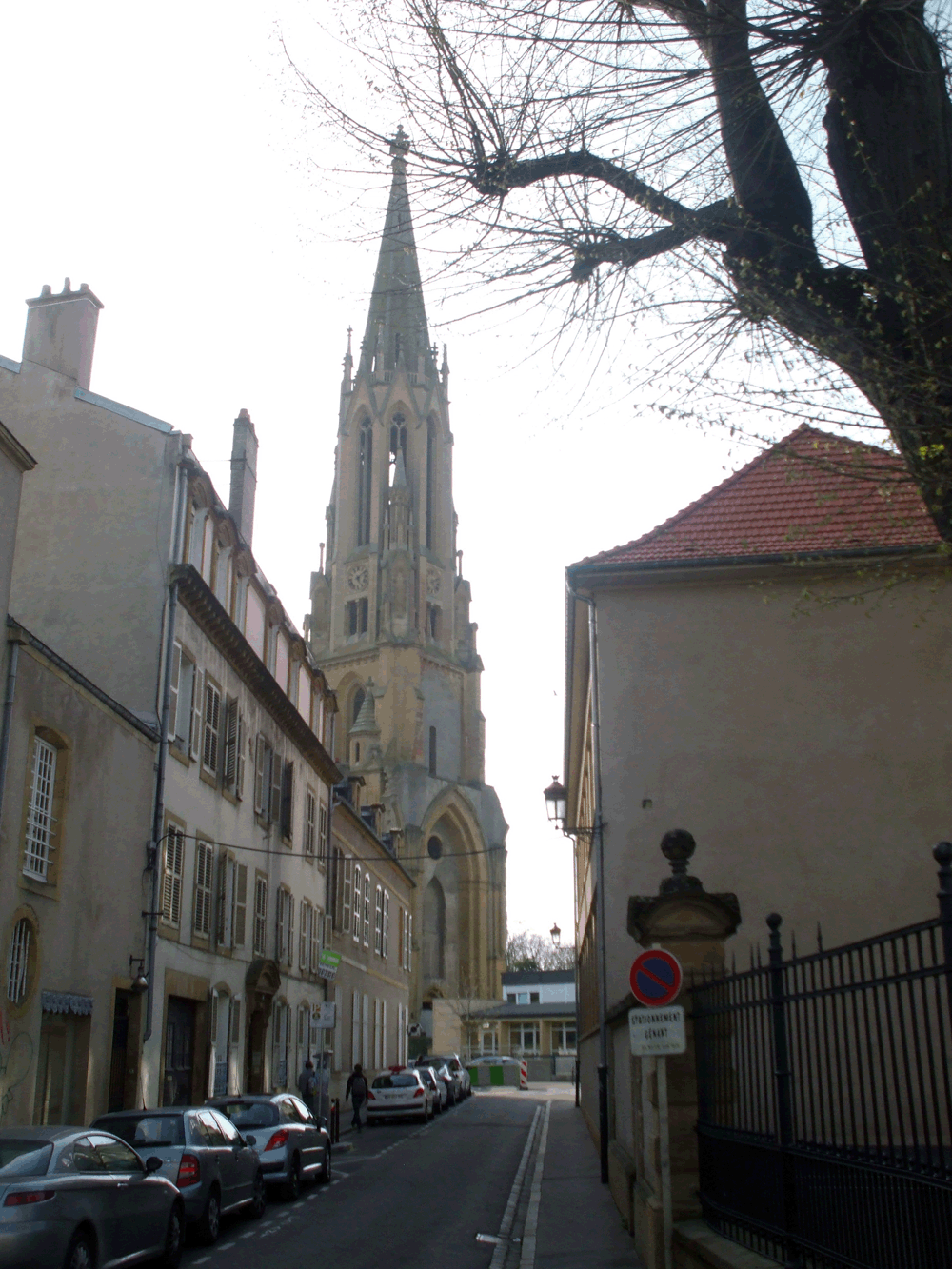
Garrison Church spire, Metz. The building was damaged in World War Two and the body of the church demolished.
By the early twentieth-century, however, things had changed. When another Protestant church, the New Temple, was consecrated in 1904, in the presence of Kaiser Wilhelm II, it was constructed in dark limestone in a Germanic Neo-Romanesque style which clearly clashed with the eighteenth-century buildings near it. Around the same time, the military governor’s mansion was built in a Neo-Flemish style that, though not German, was clearly not French either.
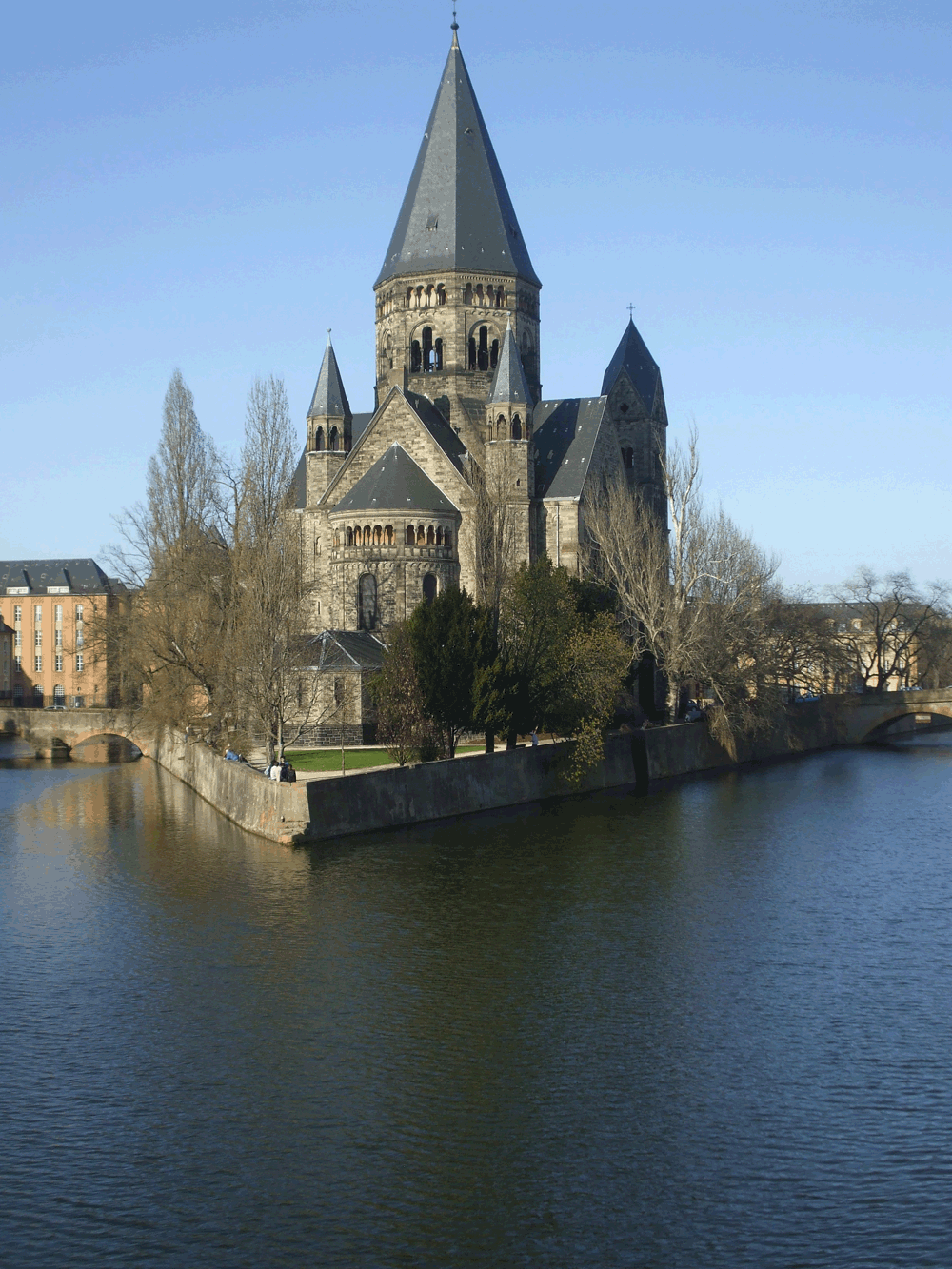
New Temple, Metz
Then, from 1905, an entirely German district, called the Imperial Quarter, was developed around the railway station. The station had to be rebuilt for military reasons, to enable it to cope with the movement of large numbers of troops, as required by the Schlieffen Plan. The new station was larger, built in the style of a Carolingian palace (the Germans, correctly, recognised that Charlemagne was German, not French), and the Imperial Quarter around it was self-consciously Germanic, intended to show Germany as modern, artistic and efficient, in contrast to the German view of France. Instead of the Jaumont stone used on the Garrison Church the new buildings used materials employed in the Rhineland, pink and grey sandstone, granite and basalt. Among the modern styles used was Art Nouveau, called Jugendstil in Germany.
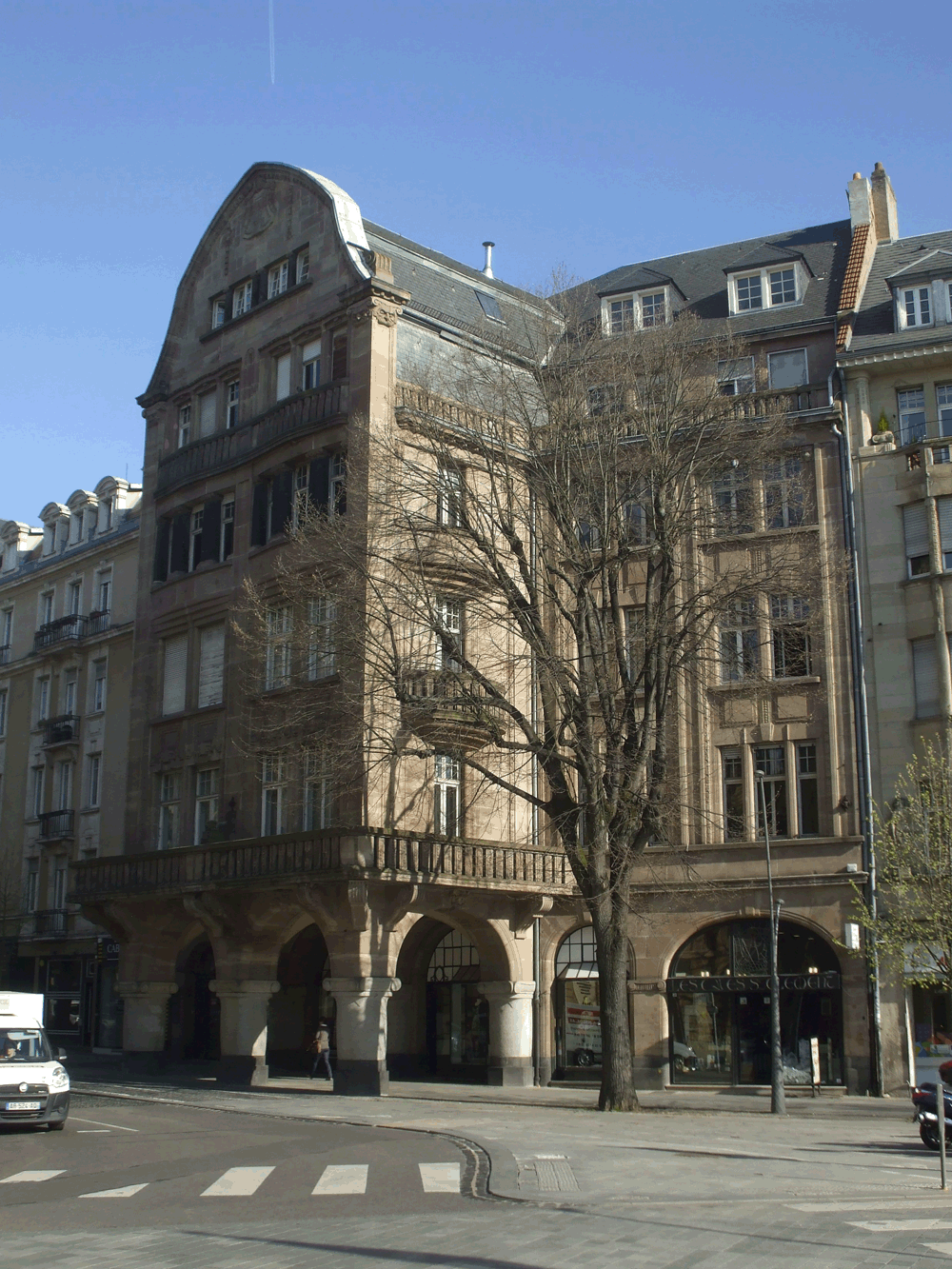
Imperial Quarter, Metz
The Imperial Quarter is an astonishing district, full of beautiful and imposing buildings. Most of them were only German for a decade or so, but it says a lot for the German planners that the French completed the district after Metz had been restored to France in 1918.
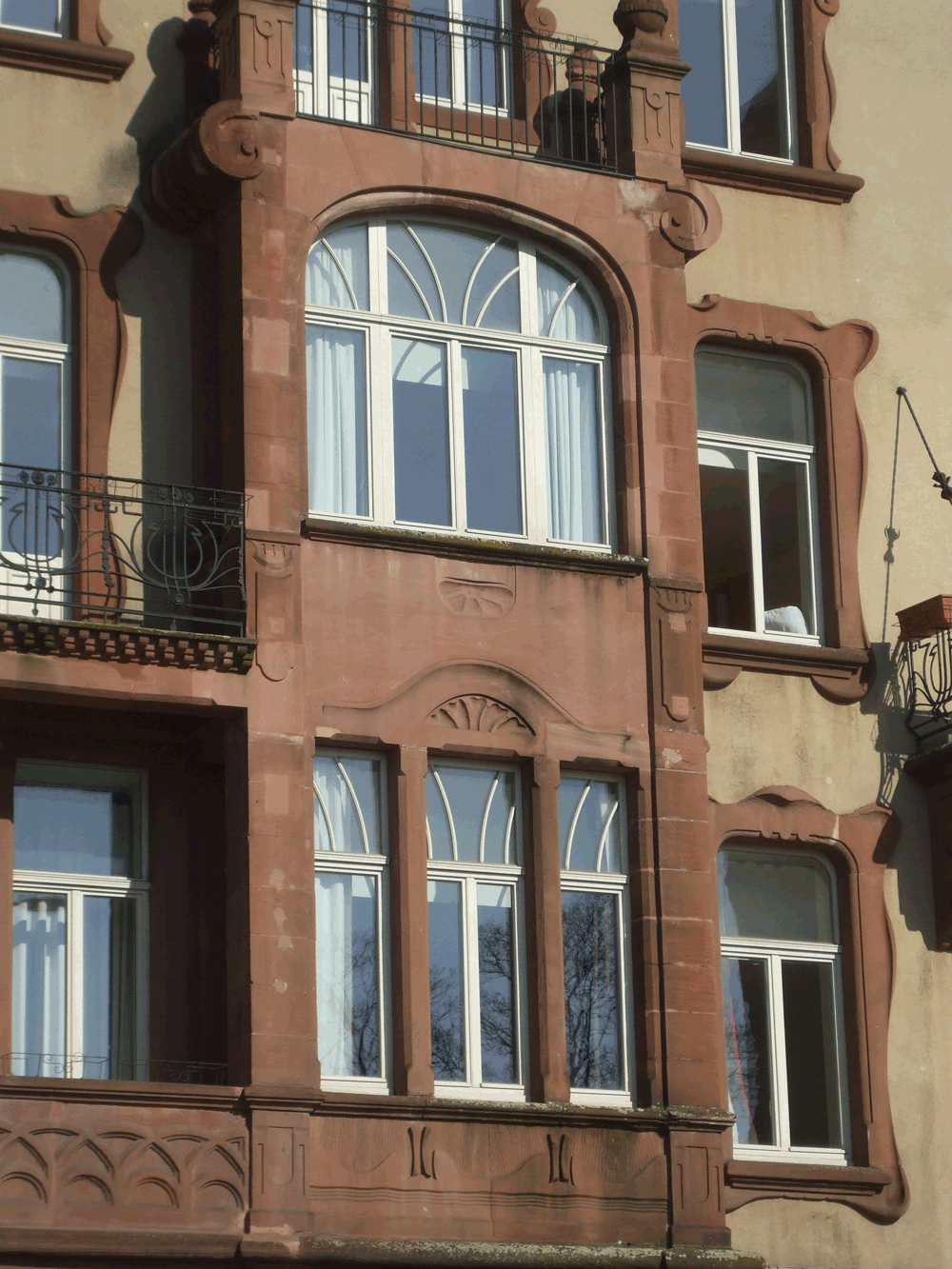
Jugendstil details, Metz
While Metz was being beautified by the Germans, Nancy, further south, in that part of Lorraine that had remained French, prospered from its new status as a border city and because of immigration from the annexed territories. The city played a major part in the development of Art Nouveau (l’Ecole de Nancy), and many Art Nouveau buildings sprang up straddling the railway to the west of the city’s medieval and eighteenth-century heart.
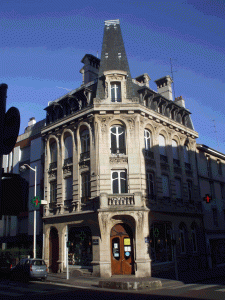
Art Nouveau block, Nancy
These included the striking Brasserie Excelsior (1911) and a number of large blocks on the site of the Battle of Nancy, where Charles the Bold, Duke of Burgundy, had been defeated and killed in 1477. How much the two cities were reacting to each other is uncertain, but the result was a fine selection of Art Nouveau in two different national styles in a fairly confined area.

Art Nouveau detail, Nancy
We should never, however, forget the context. Not far west of Metz and north-west of Nancy there is another striking structure, this time in the inter-war Art Deco style. It is the giant ossuary and memorial at Douaumont, on the battlefield of Verdun.
Posted by Malcolm
 brentmuseumandarchives
 Colin C.
 Emir Ghariani