A philanthropic legacy
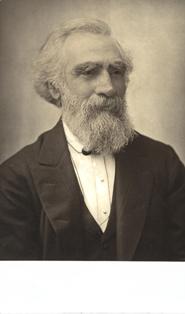
John Passmore Edwards, the Cornish philanthropist, died one hundred years ago this year. His obituary, published in local and national newspapers and newspapers across the world, showed the extent to which he was known; and he was know for his sincerity and fairness, his ceaseless championing of the working classes, and for his philanthropy.
As a young boy in Cornwall, an ambition was born, to be known and useful “in some way”, and he continued throughout his long life in pursuit of that ambition – campaigning for social and political reform, and against war and capital punishment; against injustice wherever he saw it. His contributions to Victorian Society were diverse and numerous and most visibly portrayed in the chain of seventy-one public buildings he funded, stretching from St Ives to Herne Bay.
In London he is, perhaps, mostly linked with the East End, where he funded the building of libraries, art galleries and hospitals. But his philanthropy also reached out to Willesden, where he funded the building of the Cottage Hospital, now part of the Willesden Centre for Health and Care and in use today as a resource centre for a mental health team. And it was in Kensal Green Cemetery where he was to be laid to rest in April 1911.
During 2011 the Passmore Edwards Centennial marks the life of this extraordinary Cornishman and recognises both the contribution that he made to society and the continuing good works carried out through the surviving Passmore Edwards buildings and the organisations that they were entrusted to – the Passmore Edwards Legacy.
Posted by Dean Evans.
As part of the Centennial programme, Dean Evans, author of Funding the ladder, the Passmore Edwards legacy, will be talking about that legacy at the Willesden Green library on 18 May. Join us in the Brent Museum Education Room at 6.30pm – for more information call 020 8937 3600 or email museum@brent.gov.uk.
 brentmuseumandarchives
 Colin C.
 Emir Ghariani